The legal system often feels like an intimidating landscape, accessible only to those with specialized training. For most everyday consumers, interaction with the legal framework occurs suddenly and unexpectedly. A routine commute disrupted by a severe traffic collision, a household appliance that malfunctions and causes physical harm, or an unexpected encounter with law enforcement can instantly propel an individual into a complex matrix of statutes, court procedural deadlines, and adversarial proceedings. In these high-stakes moments, emotional distress frequently compounds the difficulty of making clear, strategic decisions.
Understanding how to navigate these challenges requires a clear grasp of the two primary pillars of the American judicial system: civil law and criminal law. While both branches utilize formal courtrooms, rules of evidence, and judicial officers, they serve fundamentally different purposes, operate under distinct standards of proof, and carry vastly different consequences. Civil law addresses private disputes between individuals, corporations, or entities, primarily seeking financial compensation or equitable remedies to make an injured party whole. Criminal law, conversely, involves actions brought by the state or federal government against an individual accused of violating public statutes, where the potential consequences include fines, probation, community service, or loss of personal liberty through incarceration.
Failing to recognize these distinctions—or attempting to navigate either arena without a clear understanding of procedural requirements—can lead to severe, irreversible consequences. A consumer who mismanages a civil claim may forfeit the right to financial recovery for crippling medical bills and lost wages. Similarly, an individual who misinterprets a law enforcement investigation or attempts self-representation when facing criminal charges risks permanent damage to their reputation, livelihood, and personal freedom.
This comprehensive guide serves as an actionable roadmap for consumers. By breaking down the mechanisms of civil remedies and criminal proceedings, outlining immediate steps to take following an unexpected incident, explaining specialized product and recreational liability, detailing constitutional protections during police inquiries, and providing a framework for vetting legal representatives, this guide empowers individuals to protect their rights, preserve critical evidence, and secure appropriate legal advocacy when crisis strikes.
Differentiating Civil Remedies From Criminal Proceedings
Identifying the Burden of Proof and Burden of Production

To effectively manage a legal issue, a consumer must first identify whether the matter lies within the civil or criminal domain, as this distinction dictates how evidence is gathered, presented, and evaluated. The most significant operational boundary between these two systems is the required standard of proof.
In civil litigation, the burden of proof rests on the plaintiff—the party bringing the lawsuit—to establish liability by a “preponderance of the evidence.” This standard means that the evidence presented must demonstrate that the allegation is more likely true than not true. Conceptually, if a scale were balanced evenly, the plaintiff needs only to tilt the scale slightly beyond fifty percent to secure a favorable verdict. In certain specialized civil cases, such as those involving fraud or the termination of parental rights, an intermediate standard known as “clear and convincing evidence” may apply, requiring a higher degree of probability than a simple preponderance.
In sharp contrast, criminal prosecutions require the government to prove every element of an alleged offense “beyond a reasonable doubt.” Because a criminal conviction can deprive an individual of their fundamental right to liberty, the law imposes this exceptionally high threshold. A skilled criminal law attorney audits the prosecution’s evidence, identifies procedural irregularities, files constitutional suppression motions, and conducts independent witness interviews. The prosecution must present a compelling, logical narrative supported by physical, testimonial, or documentary evidence that eliminates any reasonable, logical hesitation regarding the defendant’s guilt. If a jury retains a plausible, logical doubt based on the evidence or lack thereof, it is constitutionally mandated to return a verdict of not guilty. Evaluating whether to accept a plea bargain or proceed to a jury trial requires the counsel of an experienced criminal defense lawyer who can candidly weigh the strength of the state’s evidence, potential trial outcomes, and long-term collateral consequences (such as immigration impacts, professional licensing forfeitures, or criminal record barriers).
Furthermore, the parties involved define the core focus of each proceeding:
- Civil proceedings: Initiated by private citizens, small businesses, or corporations against other private parties. The government’s role is strictly limited to providing a neutral judicial forum—the judge, court personnel, and trial infrastructure—to resolve the dispute.
- Criminal proceedings: Initiated exclusively by government prosecutors (such as district attorneys, state attorneys general, or federal prosecutors) on behalf of the public or the state. The victim of a crime is considered a complaining witness for the prosecution rather than a formal party to the lawsuit.
Seeking Financial Restitution for Physical, Emotional, and Economic Damages
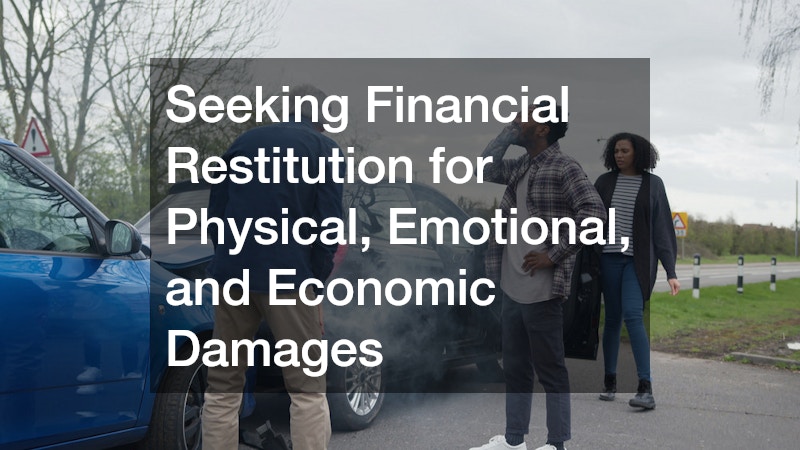
When a consumer suffers harm due to another party’s negligence, breach of contract, or intentional misconduct, the civil court system provides mechanisms for monetary recovery. Civil remedies do not aim to punish the wrongdoer in most standard cases, but rather to compensate the injured party for quantifiable and subjective losses resulting from the incident.
Compensatory damages in civil matters are generally divided into two main categories:
- Economic (special) damages: Quantifiable monetary losses directly resulting from the harm. These include past and future medical bills, emergency room fees, rehabilitation costs, lost current wages, diminished future earning capacity, property repair or replacement expenses, and out-of-pocket costs for household assistance during recovery.
- Non-economic (general) damages: Subjective, non-monetary losses that affect an individual’s quality of life. These encompass physical pain and suffering, emotional distress, mental anguish, permanent physical impairment, disfigurement, loss of enjoyment of life, and loss of consortium (the loss of companionship or intimate relations with a spouse).
In rare cases involving egregious, malicious, or grossly negligent conduct, courts may also award punitive damages. Unlike compensatory damages, punitive damages aim to punish the wrongdoer and deter similar reckless behavior across the broader industry or community.
Navigating the valuation and prosecution of these claims requires sophisticated evidence gathering, medical record analysis, expert economic forecasting, and structured negotiation strategies. Experienced personal injury attorneys evaluate claims by calculating immediate economic losses while factoring in long-term inflation, ongoing medical needs, and life-impact assessments. Insurance adjusters frequently attempt to minimize payouts by offering quick settlements before the full physical or financial impact of an injury is known.
Establishing a structured civil claim strategy requires working alongside an established personal injury lawyer who understands state-specific procedural rules, such as statutes of limitations—the strict statutory deadlines within which a lawsuit must be formally filed. Missing a statute of limitations by even a single day permanently bars an injured consumer from recovering compensation, regardless of how clear the opposing party’s liability may be.
Responding Immediately to Unexpected Accidents and Property Hazards
Documenting Evidence at the Scene of an Incident or Hazardous Premises
The hours and days immediately following an unexpected injury or property hazard are critical for building a solid evidentiary foundation. Evidence degrades quickly: physical hazards are cleaned up or repaired, weather conditions alter road surfaces, surveillance footage is routinely overwritten, and witness memories fade. A consumer who takes methodical steps at the scene dramatically increases the likelihood of a successful legal outcome.
When an accident occurs on commercial, private, or municipal property, consumers should follow a structured documentation protocol:
- Capture comprehensive visual evidence: Use a smartphone camera to take high-resolution photographs and wide-angle videos of the surrounding area, focusing on the specific hazard that caused the incident. Capture environmental context, such as lighting conditions, missing handrails, wet floor signs (or the lack thereof), liquid spills, uneven flooring, or weather-related accumulations. Take photographs from multiple angles and distances, including close-ups with a reference object to demonstrate scale.
- Identify and preserve witness statements: Collect the full names, phone numbers, email addresses, and physical addresses of any bystander who observed the incident or the pre-existing hazard. Independent witness testimony carries substantial weight in settlement negotiations and trials, as non-party witnesses have no financial stake in the outcome of the case.
- Formally report the incident: Notify the property manager, store supervisor, or landlord immediately. Insist on completing a formal, written incident report, and demand a physical or digital copy before leaving the premises. State the facts clearly without speculating on cause, underestimating your injuries, or offering unnecessary opinions.
- Preserve physical evidence: Store the exact footwear, unwashed clothing, and damaged personal property worn or used during the incident in a safe location. Footwear treads, for instance, are frequently inspected by defense experts attempting to shift blame onto the victim.
Addressing Complex Off-Road Vehicle and Specialty Recreational Hazards
Recreational consumer products—such as all-terrain vehicles (ATVs), utility task vehicles (UTVs), personal watercraft, e-bikes, and specialized sporting equipment—present unique legal and technical challenges when accidents occur. Unlike standard passenger motor vehicles, which operate under uniform highway traffic laws, off-road and recreational vehicles operate across a patchwork of private lands, public parks, commercial rental facilities, and unpaved trails.
Off-road vehicle incidents frequently involve complex liability factors:
- Mechanical and design vulnerability: ATVs and UTVs are susceptible to rollover accidents, suspension failures, steering lockups, and throttle sticking issues. Determining whether an incident resulted from operator error, poor trail design, or a mechanical failure requires detailed engineering analysis.
- Multiple potential defendants: A single recreational vehicle incident may involve claims against the vehicle manufacturer, component part suppliers, commercial rental operators who failed to maintain the fleet, property owners who created unmapped artificial hazards, or negligent tour guides.
- Protective equipment and assumption of risk: Defense attorneys routinely argue that recreational enthusiasts assumed the inherent risks of off-road activity or failed to wear adequate protective gear. Overcoming these arguments requires showing that the harm resulted from an extraordinary, unexpected hazard or product defect rather than a normal, inherent risk of the activity.
Navigating these multifaceted claims requires specialized technical knowledge. Engaging a knowledgeable ATV accident attorney ensures that vehicle onboard diagnostics, electronic control module data, crash site topographies, and manufacturer safety recall histories are properly audited to pinpoint liability and counter common defense strategies.
Navigating Insurance Adjusters Without Compromising Your Legal Position

Following an accident, a consumer is almost invariably contacted by an insurance claims adjuster representing the property owner, driver, or corporate entity involved. While adjusters may sound empathetic, friendly, and helpful, their primary professional obligation is to mitigate financial liability for their employer.
Insurance companies utilize sophisticated tactics to minimize payout exposure. One common approach is requesting a recorded telephone statement shortly after the event. Adjusters know that victims are often in pain, taking medication, or lacking a full medical diagnosis in the immediate aftermath of an injury. Statements made during these initial calls—such as an offhand comment of “I’m feeling okay” or an uncertain estimation of speed or distance—can be transcribed and used out of context to dismantle a future claim.
To protect your legal position during insurance interactions, observe the following parameters:
Navigating property owner negligence requires proving that the owner knew or, through reasonable inspection, should have known about a hazardous condition and failed to repair or warn against it. Consulting skilled slip and fall attorneys ensures that critical evidence—such as commercial sweeping logs, internal maintenance records, prior complaint files, and digital video surveillance—is formally preserved through spoliation letters before the property owner can delete or destroy it.
Furthermore, managing interactions with insurance representatives requires an understanding of how injury claims are valued over time. Partnering with a dedicated accident injury attorney protects consumers from deceptive tactics, ensures medical treatment plans are fully documented by qualified medical providers, and creates the necessary leverage to negotiate fair financial recovery.
Handling Specialized Liability and Product Failure Claims
Preserving Defective Merchandise and Chain of Custody for Evidence

When a consumer product causes sudden injury, property damage, or illness during normal, foreseeable use, the legal framework shifts from standard negligence to the specialized realm of product liability. Manufacturers, distributors, wholesalers, and retailers hold a legal obligation to ensure their products are reasonably safe for consumer use.
Product liability claims generally fall into three distinct categories:
- Design defects: Inherent flaws in the product’s engineering or architectural design that make it unreasonably dangerous, even when manufactured perfectly according to specifications.
- Manufacturing defects: Errors or quality control failures occurring during the assembly or production process that cause a specific unit to deviate from its intended design, rendering it unsafe.
- Marketing defects (failure to warn): Inadequate instructions, missing safety warnings, or improper labeling regarding inherent risks associated with using the product in a predictable manner.
In product liability cases, strict liability often applies. Under strict liability principles, an injured consumer does not necessarily have to prove that a manufacturer was careless or negligent, but rather that the product was defective, that the defect existed when the product left the defendant’s control, and that the defect directly caused the consumer’s injuries.
The success of a product liability claim depends heavily on preserving the product in its exact post-incident state. Attempting to repair, clean, modify, or disassemble a failed product can destroy crucial technical evidence and lead to defense assertions of evidence spoliation.
Consumers should immediately isolate the failed item, along with its original packaging, instruction manuals, purchase receipts, warranty cards, and any attached components. Store these items in a secure, climate-controlled location. Retaining a specialized defective products attorney allows for a formal chain of custody to be established, ensuring that independent forensic engineers can inspect, test, and analyze the item without compromising its admissibility in court.
Retaining an assertive criminal defense attorney or litigator who sets realistic goals, provides honest evaluations of case strengths and weaknesses, and maintains clear communication protects your interests throughout every stage of the legal process.
Navigating the intricacies of civil and criminal legal matters requires a clear understanding of your rights, meticulous attention to detail, and decisive, informed action. Whether recovering from an unexpected injury, dealing with a dangerous consumer product, or exercising constitutional protections during a law enforcement investigation, the choices made in the immediate aftermath of a crisis shape the ultimate outcome. By distinguishing between civil remedies and criminal obligations, preserving crucial physical and digital evidence, avoiding common communication traps with insurance adjusters or investigating officers, and securing qualified local attorneys tailored to the specific jurisdiction and practice area, consumers can effectively protect their financial security, personal reputation, and fundamental legal rights.